
Falling is Forgiven, Never Forgotten – Reclaim Your Balance

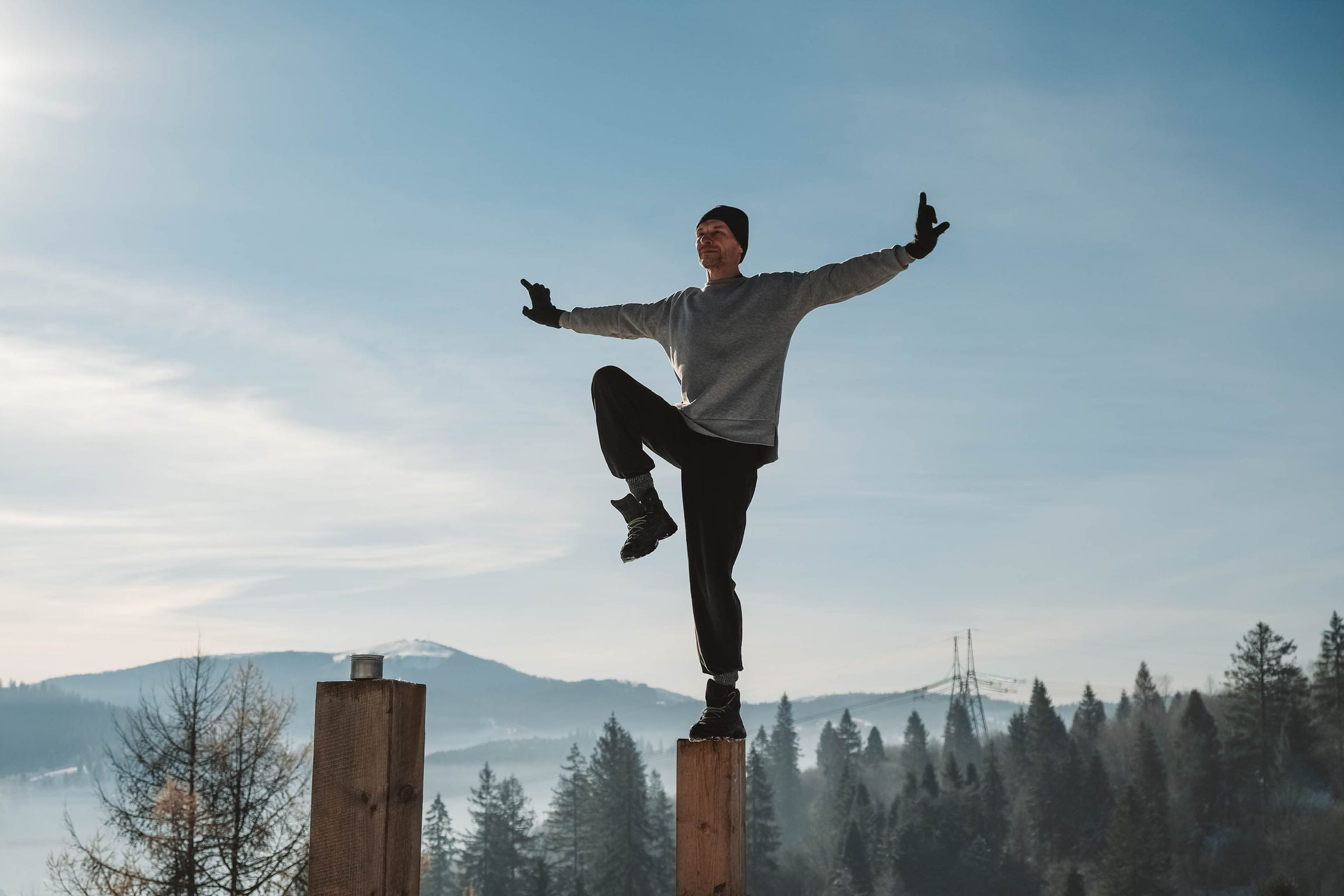
A lot of us in cognitive decline have difficulty with balance which in many ways leads to a problem with walking. I know I do.
This article will explore this problem and present ways to handle the situation.
Weak legs?
Many of you of you think your problem lays in weak muscles in the legs. But the difficulty accurately lies in your feet.
Here’s what I discovered accidentally while I was doing research for myself to strengthen the muscles of my legs. My wife handed me her phone and said, “You might want to read this. It might make a good article,”
And what she had shown me might have been, had it been an authentic account. Instead, it was an ad, a scare tactic. The story basically said there’s nothing you can do to improve your balance. Note:
I was buying into this. I didn’t realize it was an ad. I thought it was breaking news on the subject.
· No foot exercises would work
· No leg exercise would help
And I had been doing workouts on the dexterity of my legs/feet so this information was a knockdown. They placed the whole blame on the sole of the foot.
The whole blame.
It frightened me. Most of you know how much I want to walk independently. So do many of you. And the writers of this article were warning me there was no hope.
What I hadn’t realized was that it was an ad for shoes, their shoes, I still felt defeated - what if they were right – that there was no hope except for their nearly-soleless shoes? So, I researched walking and balance and found no mention of any footwear anywhere. I came across everything about hope.
I’m not saying everyone can walk again or should pitch away their walkers. But at least one of the exercises at the end of this article should benefit practically everyone reading this piece.
People with dementia face close to double the risk of falling compared to older adults without cognitive decline. This is due to impaired balance, poor spațial judgment and, in many, confusion. Unfortunately, these events often lead to severe injures, hospital stays and the loss of their independence. Risk factors that can contribute to falls include muscle weakness, a shuffling gait and slow reaction time to catch your spill.
Your medications might have side-effects such as dizziness, sleepiness or low blood pressure. Make sure you talk to your physician about possible side-effects. If you have any unusual reactions to the recommended dosage, contact your doctor right away.
If you have trouble judging distance, have loose rugs or clutter on the floor, or you run to the bathroom without assistance, you surely could take a tumble. I fell reaching a bed cover to steady myself, broke a hip. Broke my other hip tripping over my shorts in the bathroom.
Another risk factor is having difficulty processing shapes and colors. If the kitchen is all white, you’re more likely to run into something that’s the same color, so having contrasting colors improves your navigation. Something like fairy lights may be one solution. If you do have a monochromatic room, you can accent it with another color.
The foot
There are 7,200 nerves in the foot.
Each foot has nearly 26 bones,
33 joints,
107 ligaments,
And more than 100 muscles.
These all work together for movement, sensation and balance. This complex structure allows the foot to be adaptable.
The foot is the is the body’s shock absorber
Nerves in the feet are responsible to send sensory information to the brain – like pressure, touch and vibration.
The Stepping Stone
Reading the information I’ve shared with you, might make you feel like you're stuck – that you can’t do anything about your balance, but that just isn’t so.
You can improve your balance and reduce falls.
· There are exercises that give me more balance and help me walk. Foot and balance exercises can help strengthen muscles, improve gait and potentially reduce the risk of falling.
One exercise that has helped me to walk somewhat more independently is the stand-up, sit-down practice. All you have to do is stand up and sit down, 15 repetitions. Builds strength and boosts posture. I have to push against the chair to stand - with the goal of not using my hands to stand at all.
Balance is a complex system involving
· Eyes
· Inner ear
· Spinal cord
· Cerebellum
· Nerves of your feet, legs, spine and other areas of the brain
Work-outs for balance
Ø Place your hands on a counter or a wall (I use the handles of my walker – walker locked) and then lift up and down on your toes, 15 reps
Ø Toe curls: sitting on a chair, curl you toes 15 times
Ø Toe spreads; spread them out for 15
Ø Toe squeezes: 15 of them
Ø Stand up, and next to a wall for safety, spread your feet shoulder width, place your hands on the wall and let go for 30 seconds, 10 repetitions
Ø When you have succeeded in the above, stand with your feet together for 30 seconds, 10 times, then on one foot, the other foot, then when you’ve been through all of those, repeat all, starting over, with your eyes closed. Have something to reach for if you begin to fall.
Don’t hurry through theses standing ones. I don’t want you to hurt yourself. If the first one is simple, do it at least once all the way through before you try the next one.
The path to better balance is ongoing. It will most likely go downhill if you don’t take action to improve it. The rising road, instead, is supported by understanding your body’s systems mentioned in this article, recognizing you risks (specific potentials for falling) and by embracing the benefits of consistent, gentle exercise.
A note on the exercises: they’re so easy to do and you’ll find comfort after doing them.
Please remember, you are not alone.
Till Monday or in the chat…
Judi 🦋
“Balance is not something you find, it’s something you create.” Jonas Salk (Developer of the polio vaccine)
Thanks for this ! A helpful reminder and well set out. Now just to keep practicing.